




Subtotal: $4.99
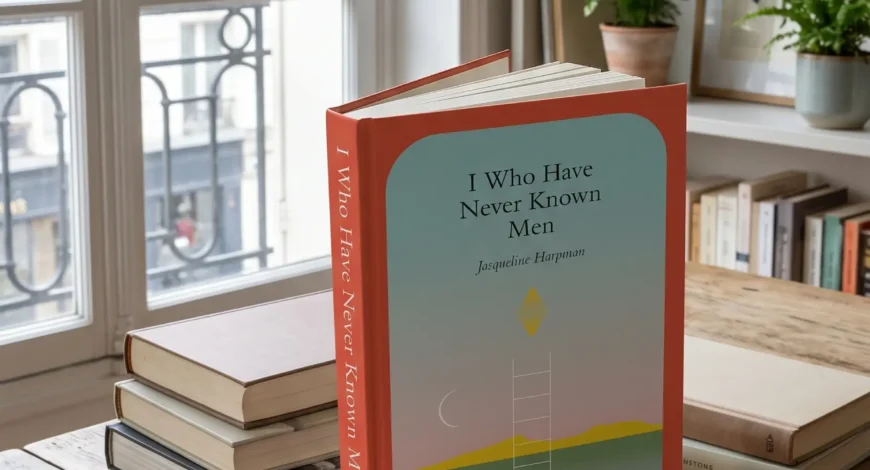
I Who Have Never Known Men: Haunting 2026 Review
Introduction:
Thirty-nine women are locked in a cage deep underground. The youngest of them has never known anything else.
That chilling premise is the starting point of I Who Have Never Known Men, Jacqueline Harpman’s cult classic of feminist speculative fiction. This I Who Have Never Known Men review gives you a spoiler-free summary, the big themes, an honest list of strengths and weaknesses, and a clear answer on whether it’s the right book for you.
⚡ Key Takeaway (TL;DR)
- What it is: A short, austere post-apocalyptic novel by Belgian author Jacqueline Harpman about women held captive underground, narrated by a girl with no memory of the world before.
- Originally published: In French in 1995. It was translated into English by Ros Schwartz, and Transit Books reissued a revised translation in 2022.
- Best for: Readers who like philosophical, character-driven speculative fiction with no easy answers.
- Watch out for: The world is never fully explained, and the tone is bleak.
- Our rating: ⭐⭐⭐⭐½ out of 5 (for the right reader)
Table of Contents
I Who Have Never Known Men: Overview and Plot Summary
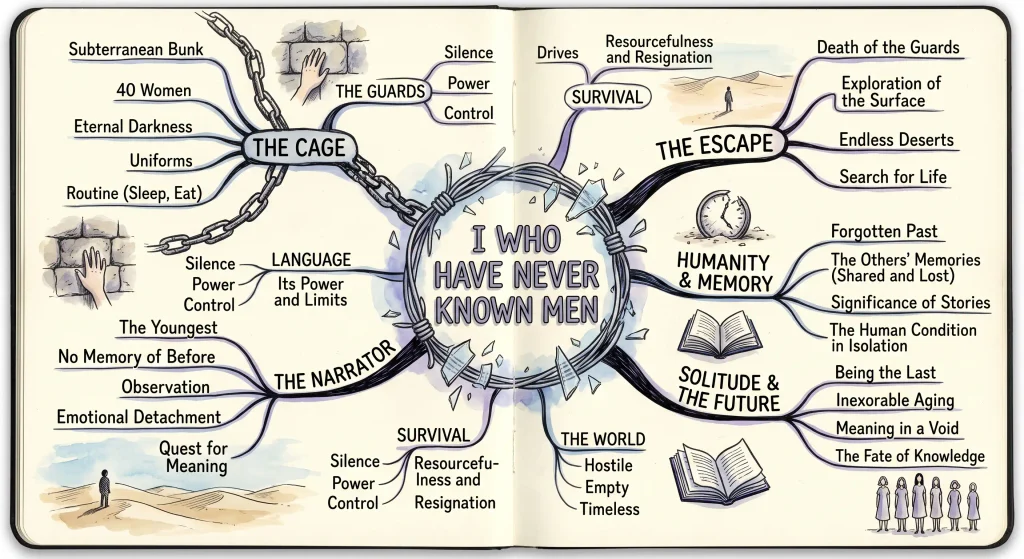
I Who Have Never Known Men opens in a cage underground. Thirty-nine women live there, watched by guards, for reasons nobody ever explains. The narrator is a girl who is far younger than the others. She has no memory of life outside, no recollection of a family, and no sense of what a world beyond the cage might look like.
The older women remember, and their memories become a kind of lost country the narrator can only imagine. She asks questions they can’t answer, and she watches how they hold on to their humanity. Kirkus describes the book as a tale of 39 women and a girl held for decades in a bunker for reasons never made clear to them. What happens when the cage stops being the whole story is best discovered on your own, so this review stops there.
About the Author and the Translation
Jacqueline Harpman (1929 to 2012) was a Belgian author of more than fifteen novels. According to Transit Books, she was born in Etterbeek, Belgium, fled to Casablanca with her family during World War II, and worked as a psychoanalyst. That background shows in the book’s interest in memory, identity, and how people build meaning without a past.
I Who Have Never Known Men was first published in French in 1995 and was the first of her books translated into English. Ros Schwartz translated it, and Transit Books brought it back into print with an afterword by Sophie Mackintosh. You can read more on Harpman’s Wikipedia page or on the Transit Books page for the novel. In 2026, Transit also published a new collection of Harpman’s stories, also translated by Schwartz, which is one reason the author is getting fresh attention. See the Kirkus review of that collection.
Top 5 Takeaways From I Who Have Never Known Men
This is a novel of ideas, and it leaves you with questions you can apply to real life.
1. Identity Doesn’t Require a Past
The narrator has no memories to anchor her, yet she forms a distinct self. The book asks what makes someone who they are when history is stripped away. Real-world takeaway: Your identity is built from how you pay attention and what you choose to care about, not only from where you came from.
2. Dignity Survives Suffering
A French critic quoted by the publisher said Harpman captures the difficulty of staying human in the face of suffering. The women keep finding small ways to preserve dignity. Real-world takeaway: In hard seasons, small rituals and kindnesses matter more than they seem.
3. Friendship and Intimacy Are Lifelines
The publisher calls the novel a story of female friendship and intimacy, and the bonds between the women are what keep the story from collapsing into pure despair. Real-world takeaway: Connection is a form of survival.
4. Not Every Question Gets an Answer
Unlike many science fiction novels, the world here has no hidden infrastructure and no grand reveal. One blogger said she kept craving more world-building detail, which is part of the book’s design. Real-world takeaway: Learning to live with uncertainty is a skill, and this book practices it with you.
5. Reading Is a Privilege
A writer for The Cut noted that the book makes you think about what a privilege it is to read at all. In a story where the narrator has almost no access to knowledge, books and memory feel precious. Real-world takeaway: Notice what you have access to, and use it.
Check Current Price on the I Who Have Never Known Men Digital eBook →
Strengths and Weaknesses: I Who Have Never Known Men Pros vs Cons
| ✅ Pros | ❌ Cons |
|---|---|
| Haunting, original premise that stays with you | The world and its rules are never fully explained |
| Praised by The New York Times and The New York Review of Books | Very bleak tone; the Times called it about as heavyhearted as fiction gets |
| Compact and easy to read in a few sittings | Slow, philosophical pacing, not a plot-driven thriller |
| Thoughtful look at identity, memory, and friendship | Some readers want answers and may feel frustrated |
| Revised 2022 translation with a new afterword | Open-ended, ambiguous storytelling isn’t for everyone |
Reader opinion is strong but interestingly divided. Some call it strange and beautiful, while others admit they have mixed feelings and wanted far more detail about how the world works. If you need a story that explains itself, expect some frustration.
Who Should Read I Who Have Never Known Men (And Who Should Skip It)
Read it if you:
- Love literary, philosophical speculative fiction
- Enjoy feminist classics and translated fiction
- Like short books that leave you thinking for days
- Are comfortable with ambiguity and an unresolved mystery
Skip it if you:
- Want fast action or a neat resolution
- Are looking for something cozy or uplifting right now
- Find themes of captivity, loss, and despair distressing
If you want something faster afterward, our full Dear Debbie review and this second take on Dear Debbie cover a twisty, quick-reading thriller that makes a good palate cleanser.
How I Who Have Never Known Men Compares to The Handmaid’s Tale
Margaret Atwood’s The Handmaid’s Tale is the best-known feminist dystopia, so it’s the natural comparison. Both books explore control over women’s lives, but they work very differently.
| I Who Have Never Known Men | The Handmaid’s Tale | |
|---|---|---|
| World | Unexplained, austere, mostly a cage and beyond | A defined authoritarian society (Gilead) |
| Narrator | A girl with no memory of the world before | A woman who remembers her former life |
| Pace | Slow, meditative | Plot-driven, tense |
| Answers | Few, by design | Many details about how the society works |
| Best for | Readers of philosophical fiction | Readers who want a structured dystopia |
If you want to understand how an oppressive system works, start with Atwood. If you want to feel what it’s like to exist without answers, pick Harpman.
Final Verdict: Is I Who Have Never Known Men Worth Reading?
Rating: ⭐⭐⭐⭐½ / 5
I Who Have Never Known Men is not an easy book, and it isn’t meant to be. It’s spare, sad, and deliberately withholding. But for readers who want fiction that asks real questions about identity, friendship, and what it means to be human, it’s one of the most memorable speculative novels of the last thirty years. If you’re comfortable with ambiguity, it’s well worth reading.
Want to see what the publisher and critics say? Visit the Transit Books page.
Get the I Who Have Never Known Men Digital eBook →
Frequently Asked Questions (FAQ)
What is I Who Have Never Known Men about?
It follows a girl who lives in an underground cage with thirty-nine women, guarded for reasons never explained. She has no memory of the outside world, and the story explores identity, friendship, and survival.
Who wrote I Who Have Never Known Men and who translated it?
Belgian author Jacqueline Harpman wrote it in French in 1995. Ros Schwartz translated it into English, and Transit Books published a revised edition in 2022 with an afterword by Sophie Mackintosh.
Is I Who Have Never Known Men depressing?
It’s heavy and bleak, and the New York Times described it as about as heavyhearted as fiction can get. It also has moments of tenderness through the women’s friendships, so many readers find it moving rather than simply sad.
Is I Who Have Never Known Men available as a digital eBook?
Yes. You can get the I Who Have Never Known Men digital eBook through our store.
Ready to read it yourself? Grab the I Who Have Never Known Men Digital eBook Here →

Previous Post