




Multicultural Counseling: The Complete Guide to Building Cultural Competence in Modern Therapy
Introduction

Let’s be honest—people are wonderfully different.
We all grow up with different traditions, beliefs, languages, family values, and life experiences. Even two people living in the same city can see the world in completely different ways. So, when someone decides to seek therapy, they don’t leave those experiences at the door. They bring every part of their identity into the counseling room.
That’s exactly why multicultural counseling has become one of the most important topics in modern psychology.
Instead of treating every client the same way, multicultural counseling encourages therapists to understand the unique cultural background of each individual. It’s about listening without making assumptions, respecting different perspectives, and creating a space where clients truly feel understood.
The book Counseling the Culturally Diverse: Theory and Practice presents multicultural counseling as a core professional competency rather than an optional specialty, emphasizing cultural competence, awareness, and social justice in counseling practice.
Whether you’re studying psychology, working as a therapist, or simply curious about how culture shapes mental health, this guide will walk you through the essential ideas in a way that’s easy to understand—and hopefully enjoyable to read.
Table of Contents
What Is Multicultural Counseling?
Imagine visiting a doctor who assumes every patient has the exact same lifestyle, eats the same food, and faces the same daily challenges.
Sounds ridiculous, right?
That’s the problem multicultural counseling tries to solve.
At its heart, multicultural counseling is an approach that recognizes every client has a unique story. Culture influences how we think, communicate, express emotions, solve problems, and even how comfortable we feel asking for help.
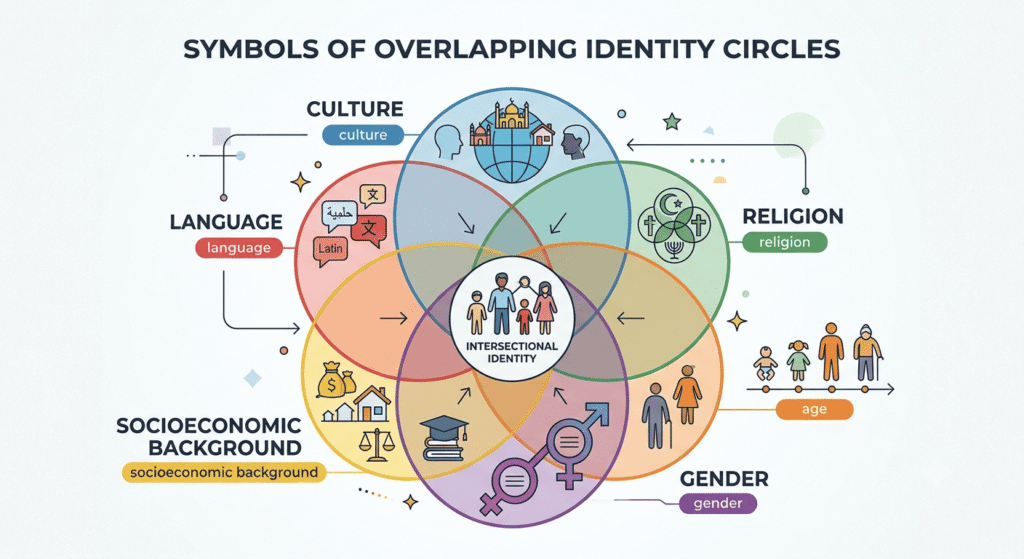
Instead of relying on a one-size-fits-all approach, counselors learn to understand how factors like race, ethnicity, religion, gender, language, family traditions, and socioeconomic background can influence a person’s mental health journey.
According to the book, multicultural counseling is grounded in cultural competence, awareness, and social justice while recognizing that identity and cultural experiences shape the counseling relationship.
It’s About More Than Just Culture
When many people hear the word culture, they immediately think about nationality or ethnicity.
But culture is much bigger than that.
It also includes:
- Family traditions
- Religious beliefs
- Gender identity
- Sexual orientation
- Age
- Economic background
- Disability
- Community values
- Life experiences
Every one of these factors influences how people see themselves—and how they experience the world around them.
That’s why two clients dealing with similar challenges may need completely different counseling approaches.
Why Traditional Counseling Doesn’t Always Work for Everyone
Here’s something that surprised me when I first learned about this topic.
Many classic counseling theories were developed using research from fairly similar groups of people. Those theories have helped millions of individuals, but they don’t automatically reflect the experiences of every culture or community.
Think about it this way.
If someone grows up in a family where talking openly about emotions is encouraged, therapy might feel natural.
But if another person comes from a background where emotional struggles are kept private, walking into a counselor’s office could feel uncomfortable—or even shameful.
Neither perspective is wrong.
They’re simply different.
That’s why multicultural counseling asks an important question:
Can one counseling approach truly fit every cultural background?
The answer is usually no.
Good counselors adapt. They stay curious, ask respectful questions, and avoid making assumptions based on their own experiences.
Why Multicultural Counseling Matters More Than Ever
Take a look around your community.
People are more connected than ever before. Schools, workplaces, and neighborhoods are becoming increasingly diverse, and counselors regularly work with clients from many different cultural backgrounds.
The book reflects this reality by covering counseling approaches for a wide range of populations, including racial and ethnic groups, immigrants and refugees, LGBTQ communities, older adults, women, individuals living in poverty, and people with disabilities.
That’s why cultural competence isn’t just a nice bonus anymore.
It’s an essential professional skill.
Every Client Has a Different Story
One of the biggest lessons from multicultural counseling is that people are shaped by far more than their symptoms.
Two people experiencing anxiety might have completely different reasons behind it.
One person may be struggling because of workplace stress.
Another may be dealing with discrimination.
Someone else could be adjusting to life in a new country while navigating an unfamiliar language and culture.
Understanding these differences helps counselors provide care that’s more respectful, more accurate, and ultimately more effective.
Understanding Cultural Competence
If multicultural counseling is the destination, cultural competence is the roadmap.
The book describes cultural competence as an ongoing process of learning and reflection rather than something you simply achieve once and never think about again. Early chapters focus on developing awareness, understanding identity, and recognizing barriers created by cultural assumptions.
1. Self-Awareness
Before helping others, counselors first need to understand themselves.
That means asking questions like:
- What beliefs have shaped me?
- What assumptions do I make without realizing it?
- How might my own experiences influence the way I see others?
It’s not always comfortable.
But growth rarely is.
2. Knowledge
The next step is learning.
Great counselors stay curious about different cultures, histories, traditions, and worldviews.
The goal isn’t to become an expert on every culture—because that’s impossible.
The goal is to replace assumptions with understanding.
3. Practical Skills
Finally, knowledge needs to become action.
That might mean:
- Adapting communication styles
- Asking open-ended questions
- Respecting different family structures
- Being aware of language differences
- Building trust before offering advice
Small adjustments like these can make a huge difference in helping clients feel safe and respected.
Why This Matters for Everyone
Even if you never plan to become a therapist, the ideas behind multicultural counseling are surprisingly useful.
They can help you become:
- A better listener
- A stronger communicator
- A more empathetic friend
- A better manager or teacher
- A more understanding family member
At its core, multicultural counseling isn’t just about therapy.
It’s about learning to see people as individuals rather than assumptions.
And honestly, that’s a skill the world could use a little more of.
Practical Multicultural Counseling Strategies That Actually Make a Difference
Now that we’ve covered the basics, let’s talk about what multicultural counseling looks like in real life.
Knowing the theory is important, but putting it into practice is where great counselors stand out. Every conversation is different, every client has a unique story, and there’s no magical script that works for everyone. Instead, multicultural counseling encourages therapists to stay curious, flexible, and genuinely interested in understanding the person sitting across from them.
The book emphasizes that culturally competent counseling isn’t about memorizing facts about different cultures—it’s about developing the awareness, knowledge, and skills to build meaningful therapeutic relationships.
Building Trust Across Cultural Differences
If you’ve ever traveled to a new country where you didn’t speak the language, you probably know how uncomfortable it can feel to ask for help. Now imagine trying to talk about your deepest fears or painful memories in that situation.
That’s why trust is everything in counseling.
Clients need to feel safe before they’re willing to open up. For many people, especially those who have experienced discrimination, prejudice, or social injustice, trust isn’t automatic—it’s something that develops over time.
So how can counselors build that trust?
Listen More Than You Speak
It sounds simple, but it’s incredibly powerful.
Instead of assuming you already understand someone’s experience, ask thoughtful questions and give them the space to answer in their own words.
Sometimes the best response isn’t advice.
It’s simply listening.
Stay Curious Instead of Making Assumptions
Here’s a small example.
Two clients may celebrate the same holiday, but it could have completely different meanings for each of them based on family traditions, personal beliefs, or cultural experiences.
Rather than guessing, ask.
Questions like:
- “Can you tell me what this means to you?”
- “How does your family usually handle situations like this?”
- “Is there anything about your background that you’d like me to understand?”
These questions show respect while helping counselors better understand each client’s perspective.
Respect Different Communication Styles
Not everyone communicates emotions the same way.
Some people are expressive.
Others are quiet.
Some maintain eye contact.
Others avoid it as a sign of respect.
Neither approach is right or wrong.
Multicultural counseling reminds us that communication styles are often influenced by culture, family, and life experiences rather than personality alone.
Understanding the Many Layers of Identity
One of my favorite ideas from the book is that people can’t be understood through a single label.
Think about yourself for a second.
You’re not just your job.
You’re not just your age.
You’re not just your nationality.
You’re a combination of experiences, relationships, beliefs, goals, successes, and challenges.
The same is true for every client.
The book encourages counselors to recognize that identity includes many overlapping dimensions such as race, ethnicity, religion, gender, age, sexual orientation, socioeconomic status, disability, and more.
This matters because every one of those experiences shapes how people see the world.
Working With Diverse Populations
One thing I really appreciate about this book is that it doesn’t stop with theory.
The table of contents makes it clear that multicultural counseling isn’t about one specific group of people. Instead, it explores counseling approaches for many different communities, including:
- Racial and ethnic minority groups
- Immigrants and refugees
- LGBTQ individuals
- Women
- Older adults
- People living in poverty
- Individuals with disabilities
That wide range of topics highlights an important point:
There isn’t one “diverse population.”
There are countless unique communities, and every person within those communities has their own individual story.
Every Client Is an Individual
This might sound obvious, but it’s surprisingly easy to forget.
Just because someone belongs to a particular cultural group doesn’t mean they share every belief, tradition, or experience associated with that group.
Imagine assuming every person who loves soccer supports the same team.
Pretty silly, right?
Culture works the same way.
Multicultural counseling encourages therapists to stay away from stereotypes and instead focus on understanding the individual sitting in front of them.
Assessment and Diagnosis: Looking Beyond the Symptoms
Here’s where multicultural counseling becomes especially important.
Two people may describe similar symptoms, but the reasons behind those symptoms can be very different.
For example:
- One client’s anxiety may come from workplace pressure.
- Another may be dealing with discrimination.
- Someone else may be adjusting to life in a completely new country.
- Another person may be struggling with family expectations that are deeply connected to cultural traditions.
If counselors ignore those cultural influences, there’s a greater risk of misunderstanding the client’s experience.
The book highlights the importance of considering culture when understanding clients and identifying barriers that may affect counseling and assessment.
Common Mistakes Counselors Should Avoid
Nobody is perfect.
Even experienced counselors continue learning throughout their careers.
Here are some common mistakes multicultural counseling encourages professionals to avoid.
Assuming Everyone Shares Your Perspective
We all see the world through our own experiences.
The challenge is remembering that other people may see the exact same situation very differently.
Rushing to Conclusions
It’s easy to hear one detail and immediately think you know the whole story.
Good counselors slow down.
They ask.
They listen.
Then they ask again.
Ignoring the Client’s Strengths
Many conversations about diversity focus only on challenges.
But culture also provides incredible strengths.
Family support.
Community.
Faith.
Traditions.
Resilience.
Hope.
Recognizing these strengths helps create a more balanced and empowering counseling experience.
The Biggest Lessons From Counseling the Culturally Diverse
After exploring the book’s main ideas, a few lessons really stand out.
1. Cultural Competence Is a Lifelong Journey
You don’t wake up one day and suddenly know everything about every culture.
Learning never stops.
That’s actually one of the most encouraging messages in the book.
2. Self-Awareness Comes First
Before understanding clients, counselors first need to understand themselves.
Recognizing personal assumptions and biases isn’t a weakness.
It’s part of becoming a better professional.
3. Relationships Matter More Than Perfect Techniques
People rarely remember every question their counselor asked.
But they do remember how they were treated.
Feeling respected, understood, and accepted often becomes the foundation for meaningful change.
4. Diversity Makes Counseling Better
Different perspectives challenge us to think differently.
They encourage empathy.
They improve communication.
And they help create counseling approaches that truly reflect the world we live in today.
Frequently Asked Questions About Multicultural Counseling
What is multicultural counseling?
Multicultural counseling is an approach to therapy that recognizes every client has a unique cultural background, personal identity, and life experience. Instead of using the same approach for everyone, counselors learn to understand how culture influences communication, beliefs, relationships, and mental health. The book presents multicultural counseling as a core competency built around cultural competence, awareness, and social justice.
Why is multicultural counseling important?
Because people experience life differently.
Our culture influences how we express emotions, solve problems, ask for help, and understand mental health. A counselor who understands these differences is better prepared to build trust and provide care that respects each client’s unique perspective.
What is cultural competence?
Cultural competence is the ability to work effectively with people from different cultural backgrounds.
According to the book, it isn’t something you achieve once and forget about. It’s an ongoing process that combines:
- Self-awareness
- Cultural knowledge
- Practical counseling skills
Developing these areas helps counselors become more respectful, open-minded, and effective in their work.
Can multicultural counseling help everyone?
Absolutely.
While the approach is especially valuable when working with clients from diverse backgrounds, its principles—like empathy, curiosity, and avoiding assumptions—can improve every counseling relationship.
Is multicultural counseling only about race or ethnicity?
Not at all.
The book explains that identity includes many overlapping dimensions, such as age, religion, gender, disability, socioeconomic background, nationality, and sexual orientation. Understanding these intersecting identities helps counselors see clients as whole people rather than reducing them to a single characteristic.
Final Thoughts
If there’s one thing this book makes clear, it’s that great counseling starts with great listening.
It’s easy to think therapy is all about techniques and treatment plans, but Counseling the Culturally Diverse reminds us that understanding people is just as important. Every client brings a lifetime of experiences into the counseling room, and those experiences deserve to be acknowledged—not overlooked.
One of my favorite takeaways is that multicultural counseling isn’t about becoming an expert on every culture. That’s impossible. Instead, it’s about staying curious, asking respectful questions, and recognizing that we all have something new to learn.
In many ways, these lessons go beyond psychology. Whether you’re a counselor, teacher, healthcare professional, manager, or simply someone who wants to communicate better, the principles of multicultural counseling can help you build stronger, more meaningful relationships.
The world is becoming more connected every day. The better we understand each other’s stories, the better equipped we’ll be to support one another.
And honestly, that’s a lesson worth learning.
Key Takeaways
✔️ Every client has a unique cultural story.
✔️ Self-awareness is the first step toward becoming a culturally competent counselor.
✔️ Avoid assumptions and stereotypes.
✔️ Build trust before offering solutions.
✔️ Keep learning—cultural competence is a lifelong journey.
✔️ Respect differences while recognizing each person’s individuality.
✔️ Effective counseling begins with empathy, curiosity, and genuine human connection.
Call to Action
Have you read Counseling the Culturally Diverse or explored multicultural counseling in your own work or studies?
I’d love to hear your thoughts.
Leave a comment below and share your biggest takeaway. If you found this guide helpful, consider sharing it with classmates, colleagues, or anyone interested in psychology and mental health. Conversations like these help create a more inclusive and understanding world.
Internal Linking Suggestions
To strengthen your website’s SEO, consider linking this article to related content such as:
- The Psychology of Money – Book Summary
- Thinking, Fast and Slow – Book Review
- Influence: The Psychology of Persuasion – Key Lessons
- Best Personal Development Books
- Top Psychology Books Every Student Should Read
- Emotional Intelligence in Everyday Life
- Cognitive Biases Explained
- Mental Health Resources for Students
External Authority Sources (Suggested)
Linking to reputable organizations can improve credibility. Consider referencing:
- American Psychological Association (APA)
- National Institute of Mental Health (NIMH)
- World Health Organization (WHO) Mental Health
Final Note
This article is based on the themes and structure presented in your uploaded source, especially its emphasis on multicultural counseling, cultural competence, identity, and culturally responsive practice. It is an original explanation rather than a reproduction of the book’s text.

Previous Post
Cultural Competence in Counseling: A Complete

Next Post