



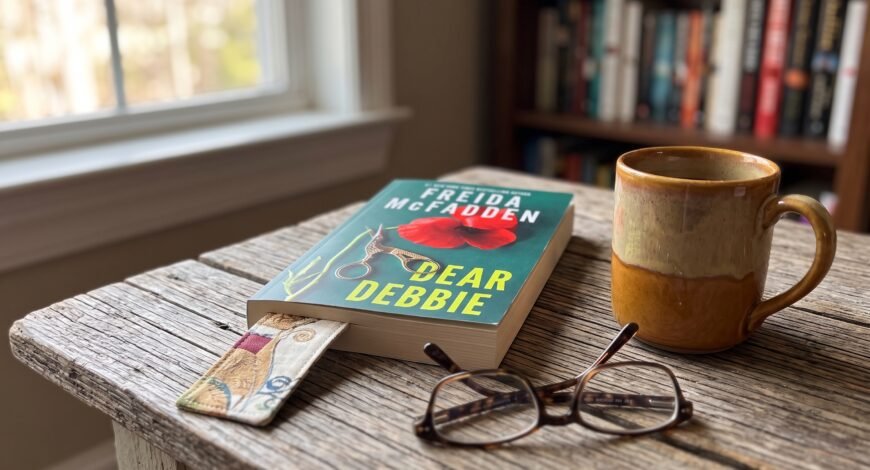
Dear Debbie by Freida McFadden: Plot Summary, Major Spoilers, and Ending Explained
Introduction
Freida McFadden has firmly established herself as the undisputed queen of modern domestic psychological thrillers. Readers flocking to psychological fiction know exactly what to expect from her storytelling: seemingly everyday situations, suburban quietude that masks dark pathology, unreliable narrators, and seismic plot twists that leave you questioning everything you just read.
If you have recently heard the buzz or noticed the trending discussions surrounding Dear Debbie by Freida McFadden, you are far from alone. Readers across BookTok, book clubs, and fiction forums are actively dissecting the intricate layers of this story. Whether you need a comprehensive Dear Debbie synopsis before diving into the book, or you have already finished it and want a complete breakdown of the Dear Debbie ending and its shocking revelations, this in-depth guide covers every angle.
Editorial Note: The first half of this article provides a spoiler-free overview and thematic breakdown. The second half contains extensive, explicit dear debbie spoilers, including the shocking dear debbie plot twist and final resolution. If you have not read the novel yet and want to preserve the mystery, grab the digital version first.
Ready to experience the chilling thrill firsthand? Get your instant copy of the Dear Debbie eBook here and dive straight into the mind-bending suspense.
Table of Contents
The Irresistible Charm of Freida McFadden’s Psychological Suspense
To understand the immense curiosity behind the dear debbie plot, one must first look at McFadden’s signature style. As a practicing physician who specializes in brain injury, McFadden brings an acute understanding of human psychology, trauma response, and deceptive behavior to her storytelling. Similar to powerhouse authors on the New York Times Best Sellers List
, she crafts page-turners characterized by short, propulsive chapters and high-stakes cliffhangers.
Her previous masterpieces—such as The Housemaid, The Teacher, and The Inmate—built a dedicated fanbase tracking every new release on platforms like Goodreads
. McFadden’s books masterfully employ narrative misdirection: she gives readers all the clues in plain sight, yet structures them so cleverly that the final revelation feels both completely shocking and logically earned.
Dear Debbie Synopsis: The Setup
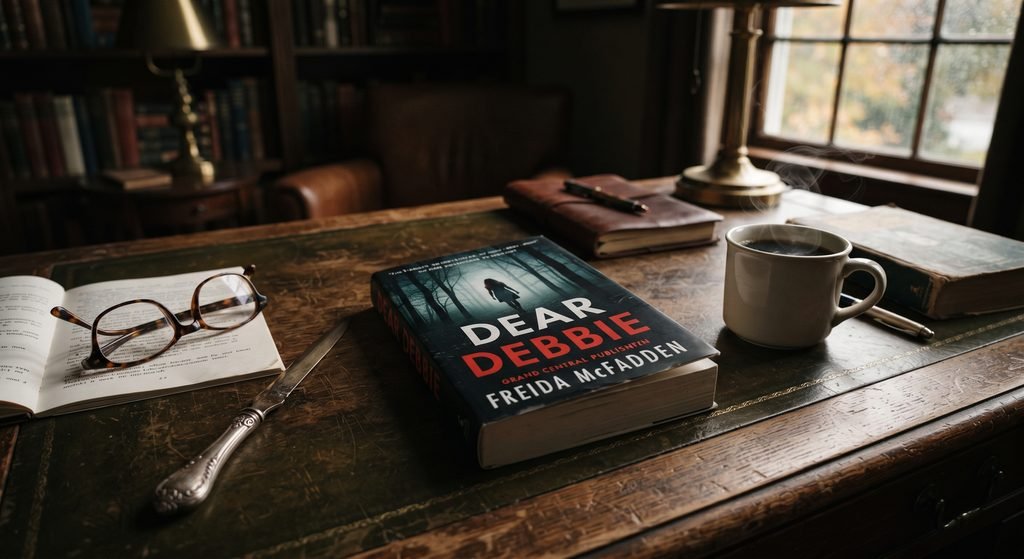
The foundation of the dear debbie plot centers on Debbie, a character whose external world appears orderly, quiet, and carefully controlled. Like many central figures in domestic noir, Debbie leads a routine life, maintaining polite boundaries and striving to keep personal vulnerabilities safely hidden from outside observers.
However, tranquility in a McFadden novel is always an illusion waiting to shatter.
The disruption begins subtly:
- The Unsettling Notes: Debbie begins receiving mysterious communications—letters and notes that carry an eerie familiarity. The messages do not merely threaten; they probe deeply personal memories and unresolved guilt from years past.
- The Expanding Circle of Paranoia: As the notes intensify, Debbie’s trust in her immediate environment begins to erode. Family members, casual acquaintances, and long-standing friends suddenly seem like potential adversaries. Every look feels loaded; every coincidence feels sinister.
- The Weight of the Past: It quickly becomes apparent that the tormentor is not an arbitrary predator. The communications specifically target an event that Debbie believed was buried forever. Confronting the present requires unearthing a dark chapter she spent a lifetime running from.
In-Depth Dear Debbie Plot Breakdown
To fully appreciate the narrative tension, let us walk through the sequential stages of the storytelling:
1. The Onset of Unease
The story opens by establishing Debbie’s day-to-day rhythm. McFadden uses early chapters to plant subtle seeds of doubt. Minor disruptions—an item misplaced in the house, an unexpected knock at the door, an ambiguous phone call—escalate into overt harassment. The antagonist, adopting an intimate and mocking tone, forces Debbie to re-examine relationships she took for granted.
2. The Web of Suspects
As Debbie scrambles to protect her privacy and peace of mind, McFadden introduces a tight-knit ensemble cast. Each character carries a distinct motive:
- A partner or close relative whose outward devotion masks hidden resentment.
- A seemingly nosy neighbor whose watchful eye borders on obsessive surveillance.
- A figure from Debbie’s distant past whose unexpected resurgence coincides perfectly with the arrival of the threatening messages.
This classic whodunit framework keeps readers frantically guessing. Just when one suspect looks unquestionably guilty, McFadden presents an airtight alibi, redirecting attention toward an even more uncomfortable suspect.
3. The Climax Approaches
Debbie’s sense of isolation reaches a breaking point. When conventional avenues for help fail or threaten to expose her own past transgressions, she decides to confront the antagonist directly. This sets off a high-stakes cat-and-mouse sequence, leading inexorably to the climactic confrontation where secrets unravel.
Warning: Major Dear Debbie Spoilers Ahead
📖 Quick Note: If you want our complete spoiler-free chapter breakdown & character map for Dear Debbie, you can grab the free companion guide
Stop reading here if you wish to read the book without knowing the ultimate outcomes. The following section reveals critical plot twists, character motivations, and the ending.
If you prefer to read the original text and unravel the mystery yourself, download your digital copy on Digital Haven Books before proceeding.
The Explosive Dear Debbie Plot Twist Explained
Readers searching for Dear Debbie spoilers inevitably arrive at the same core question: Who was behind the messages, and why?
In classic McFadden fashion, the novel does not settle for a basic external-culprit reveal. Instead, the narrative executes a massive shift in perspective that recontextualizes the entire story:
The Unreliable Lens
Throughout the first two-thirds of the book, readers naturally empathize with Debbie. We perceive her as a vulnerable, targeted woman desperately defending her sanity against an anonymous bully. The brilliance of the dear debbie plot twist lies in stripping away that perceived innocence.
The reader discovers that Debbie’s recollection of historical events is heavily curated, selectively filtered, and intentionally skewed. The trauma she claimed to be an innocent victim of was, in reality, a scenario where her actions directly caused devastating fallout for someone else.
The True Identity of the Antagonist
The sender of the letters is not a distant stranger; it is someone deeply entwined with the original tragedy. Rather than seeking monetary extortion or simple physical violence, the tormentor’s objective was psychological justice—forcing Debbie into a public, undeniable admission of what she had done.
The masterstroke comes when McFadden reveals that one of the characters Debbie trusted most—someone who offered comfort and advice throughout her breakdown—was working with the sender, orchestrating the entire sequence to break Debbie’s composure.
What Happens at the End of Dear Debbie? The Ending Explained
When readers ask what happens at the end of dear debbie, they are usually searching for how the final confrontation plays out and who ultimately survives the ordeal.
The Final Confrontation
The climax brings Debbie face-to-face with her past. In a claustrophobic, intense confrontation, the masks come off entirely. Evidence that Debbie believed had been destroyed long ago is laid bare on the table. When cornered, Debbie’s calculated survival instincts take over, transforming the scene from a desperate confession into a fight for control.
The Chilling Final Reveal
The final chapter of a Freida McFadden novel often includes one last parting jolt, and Dear Debbie delivers precisely that. Just as the primary conflict appears resolved, the closing pages introduce a crucial piece of private dialogue and an unsaid thought:
- While external closure is achieved for the authorities and onlookers, Debbie demonstrates that her manipulative capability has not been neutralized.
- She turns the situation around just enough to salvage her standing, showing a bone-chilling resilience that blurs the boundary between victim and villain completely.
- The closing scene leaves the reader with a visceral sense of dread: justice may have touched the surface, but the underlying darkness remains very much alive.
Thematic Analysis: Guilt, Memory, and Domestic Façades
Beyond its breakneck pacing, Dear Debbie delves into several compelling psychological themes:
1. The Perils of Suppressed Guilt
McFadden demonstrates that unresolved wrongdoing cannot simply be locked away. Debbie’s attempts to construct a flawless domestic sanctuary fail precisely because her internal guilt acts as an open door for manipulation. The tormentor does not have to create new sins; they merely leverage the skeletons already present in Debbie’s closet.
2. The Illusion of Suburban Safety
Domestic thrillers thrive on stripping away the comfort of everyday life. Dear Debbie turns familiar, comforting environments—the home, the kitchen, the private mailbox—into battlegrounds. When danger lives inside the perimeter of daily domesticity, there is nowhere safe to run.
3. Perception vs. Reality
Through cunning narrative voice, the novel explores how easily human beings accept a narrator’s perspective as objective truth. McFadden challenges the reader: how often do we mistake emotional vulnerability for moral goodness?
Where Does Dear Debbie Rank Among Freida McFadden Books?
If you are an avid collector of psychological thrillers, here is how Dear Debbie compares to other celebrated works in McFadden’s catalog:
- Pacing: Matches the rapid, short-chapter speed seen in The Housemaid.
- Atmosphere: Darker, more claustrophobic, and intensely psychological, similar to Never Lie.
- Twist Factor: Relies heavily on psychological misdirection rather than external shock value, satisfying fans who appreciate intricate character deceptions.
For readers who love authors such as Gillian Flynn, Paula Hawkins, and Shari Lapena, McFadden continues to offer some of the most reliable and exhilarating thrills in modern fiction. You can explore more background on domestic noir and thriller conventions via Wikipedia’s overview of Psychological Fiction
.
Final Verdict & How to Read It
Whether you arrived here looking for clarity on the Dear Debbie plot twist or seeking a detailed walk-through of the Dear Debbie ending, one truth remains clear: Freida McFadden knows how to construct an unputdownable story. The twists deliver genuine surprise, the pacing is unrelenting, and the final pages leave you thinking long after closing the book.
Looking to dive into more mind-bending stories and expand your digital library?
- Read the book for yourself:Download the Dear Debbie eBook instantly in PDF formats for your e-reader or tablet.
- Explore more suspense: Browse our full collection of eBooks and psychological thrillers to find your next unforgettable late-night read.

Previous Post
It Ends with Us eBook: The

Next Post