



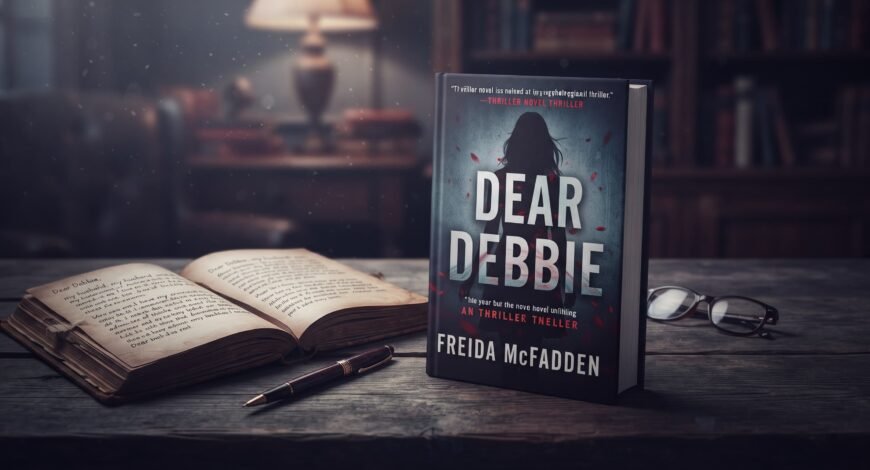
Dear Debbie –of Freida McFadden’s Explosive New Thriller 2026
Introduction
Few authors in the thriller genre have had a run quite like Freida McFadden. After the runaway global success of The Housemaid, which turned McFadden into a household name and a #1 New York Times bestselling phenomenon, readers have been eagerly waiting to see what she’d do next. The answer arrived in 2026 in the form of “Dear Debbie,” a darkly funny, twist-filled revenge thriller published by Poisoned Pen Press, an imprint of Sourcebooks.
This article offers a complete, spoiler-conscious breakdown of the novel — its premise, its central character, the themes it explores, what critics are saying, and why it’s quickly becoming one of the most requested titles at libraries and bookstores across the country. Whether you’re deciding if this is your next read, researching the book for a review of your own, or just curious about the buzz, this guide covers everything you need to know about Dear Debbie.

Table of Contents
Quick Facts About Dear Debbie
Before diving into the story itself, here’s a quick overview of the book’s essential details:
| Detail | Information |
|---|---|
| Author | Freida McFadden |
| Publisher | Poisoned Pen Press (Sourcebooks) |
| Publication Year | 2026 |
| Genre | Psychological thriller / Revenge thriller / Dark comedy |
| Pages | 327–336 (depending on edition) |
| ISBN (paperback) | 9781464249624 |
| ISBN (hardcover) | 9781464264832 |
| Setting | New England, USA |
What Is Dear Debbie About? (Plot Overview)
At the heart of the novel is Debbie Mullen, a woman who has spent years writing a beloved advice column called “Dear Debbie.” Through her column, wives from across New England write in seeking sympathy, guidance, and reassurance. Over the years, Debbie has heard it all — stories from women who feel ignored, belittled, or even abused by their husbands — and she has always tried to guide them toward the right decision.
There’s a bitter irony at the center of the book: the woman whose entire professional identity is built around giving other people good advice can no longer follow her own. As the novel opens, Debbie’s carefully constructed life is falling apart at the seams. She loses her job. Something unsettling is happening with her teenage daughters that she can’t quite explain. And, most devastatingly, she discovers — through a tracking app she secretly installed on his phone — that her husband has been keeping serious secrets from her.
It’s this final betrayal that pushes Debbie over the edge. After a lifetime of being patient, reasonable, and endlessly understanding toward everyone else, Debbie decides she’s done being the “bigger person.” She’s done offering grace to people who don’t deserve it. Instead, she resolves to finally take her own advice — and this time, that advice isn’t about forgiveness. It’s about payback.
What follows is a fast-paced, twist-laden descent into Debbie’s plan to get even with the people in her life who have wronged her the most — her husband, and anyone else standing in the way of her reclaiming control. Without spoiling the specifics, the novel is structured as a classic “wronged woman turned unstoppable force” narrative, a genre McFadden has clearly mastered, blending suspense with moments of genuinely dark comedy.
What sets Dear Debbie apart from a typical revenge thriller is its protagonist. Debbie isn’t written as a passive victim waiting to be rescued, nor is she a straightforward villain. She occupies that increasingly popular — and endlessly compelling — space of the sympathetic anti-hero.
Critics have specifically praised how McFadden balances Debbie’s likability with her increasingly ruthless choices. Kirkus Reviews described her as a “plucky, puckish” non-traditional antihero, calling the book “gleefully sadistic, gloriously gratifying revenge fiction.” That combination — a character readers can’t help but root for, even as her actions grow more extreme — is a hallmark of McFadden’s writing style and a big part of why her books resonate so strongly with readers who enjoy morally complicated protagonists.
Debbie’s background as an advice columnist also adds a clever structural layer to the book. Her entire career has been about telling other women what they should do when they’re mistreated — leave, speak up, stand your ground — and now she’s forced to confront whether she’s capable of taking her own counsel. That irony gives the novel an emotional and thematic depth that elevates it above a simple “revenge plot” and into something more reflective about the gap between the advice we give and the advice we’re willing to follow ourselves.
Meet Debbie Mullen: An Anti-Hero for the Ages
Themes Explored in Dear Debbie
Beyond the propulsive plot, Dear Debbie touches on several themes that give the book staying power beyond its twists:
- The cost of being “the bigger person.” Debbie spends years absorbing other people’s pain while suppressing her own. The novel interrogates what happens when that emotional labor finally reaches its breaking point.
- Surveillance and modern marriage. The tracking app subplot taps into a very contemporary anxiety — how technology has changed the way spouses monitor (and mistrust) one another.
- Female rage and reclamation. Like many recent hits in the genre, Dear Debbie taps into the cultural appetite for stories where women who have been wronged are allowed to be angry, calculating, and unapologetic rather than quietly suffering.
- Identity and public persona. Debbie’s public image as a warm, wise advice-giver is sharply contrasted with her private unraveling, raising questions about the personas people maintain for the world versus who they really are behind closed doors.
- Motherhood under pressure. The subplot involving her teenage daughters adds another layer of stakes, forcing Debbie to protect her family even as her own life is falling apart.
Critical Reception: What Reviewers Are Saying
Dear Debbie has generated strong buzz among both professional critics and early readers. Here’s a summary of the critical response:
Booklist (Starred Review) called it an “exciting yarn,” praising McFadden’s skill at keeping the pages turning while misdirecting the audience with several well-placed surprises. The review also noted that fans who fell in love with Millie from The Housemaid will likely find themselves rooting just as hard for Debbie.
Publishers Weekly highlighted Debbie’s “dark but consistent moral code,” which the review argued makes her easy to root for despite her increasingly extreme choices. The review also praised the book’s “darkly funny” tone, noting that it manages to be both thrilling and entertaining at once — a tricky balance to strike in the revenge thriller subgenre.
Kirkus Reviews was similarly enthusiastic, describing Debbie as a “nontraditional antihero for the ages” and the book overall as “gleefully sadistic, gloriously gratifying revenge fiction” — a description that has since been widely quoted in marketing materials and reader discussions.
Bestselling author Shari Lapena, known for The Couple Next Door, offered a blurb calling Dear Debbie “a perfectly plotted, diabolically fun revenge story,” adding that “Debbie is such an endearing psychopath — I couldn’t stop reading!” That combination of “endearing” and “psychopath” captures much of what reviewers seem to love most about the book: its willingness to let its protagonist be both sympathetic and unsettling at the same time.
Why Dear Debbie Is Worth Reading
If you’re still deciding whether to pick up a copy, here are the main reasons Dear Debbie has become one of the most talked-about thrillers of the year:
- It delivers classic McFadden suspense. If you enjoyed the twists and pacing of The Housemaid, Dear Debbie offers that same addictive, page-turning quality.
- A genuinely memorable protagonist. Debbie Mullen stands out in a crowded genre thanks to her complexity — she’s not just a victim seeking justice, but a fully realized character wrestling with years of suppressed frustration.
- A satisfying blend of tension and humor. Several reviewers specifically call out the book’s dark comedic elements, which keep the tone from becoming relentlessly grim despite its heavy themes.
- Trusted pedigree. McFadden is a #1 New York Times bestselling author whose work has been translated into more than 40 languages and has won both the International Thriller Writers Award for Best Paperback Original and the Goodreads Choice Award for Best Thriller.
- A story that resonates with current cultural conversations. Themes of surveillance, betrayal, and reclaiming agency after years of being overlooked feel especially timely.
Who Should Read This Book?
Dear Debbie is a strong pick for readers who enjoy:
- Domestic thrillers with a psychological edge
- Anti-hero-driven revenge narratives
- Fast-paced plots with frequent twists
- Dark humor woven into otherwise tense storytelling
- Character studies of women reclaiming control after being mistreated
If you loved The Housemaid, Verity by Colleen Hoover, or My Lovely Wife by Samantha Downing, Dear Debbie is very likely to land on your list of favorite reads this year.
Where to Buy or Learn More
To keep this article well-sourced and useful for readers doing further research, here are some external references where you can find more information or purchase the book:
- Dear Debbie on MIT Press Bookstore — includes the full official description along with critical praise from Booklist, Publishers Weekly, and Kirkus Reviews
- Search Goodreads for “Dear Debbie Freida McFadden” to browse reader ratings and reviews
- Check your local library’s online catalog (or search WorldCat) to find an available copy near you
- Look up the publisher, Poisoned Pen Press, for details on other titles in their thriller and mystery catalog
SEO and Backlink Strategy for Publishing This Article
If you’re planning to publish a version of this article on your own blog or book review site, here are some practical tips to help it perform well in search results:
- Use internal links strategically. Link this article to other posts on your site covering Freida McFadden’s previous novels (like The Housemaid series) or other titles within the domestic thriller and revenge fiction genres. This keeps readers on your site longer and helps search engines understand the structure of your content.
- Add credible external/outbound links. Linking out to authoritative sources — the publisher’s official page, Goodreads, major retailers, or well-known review outlets — signals to Google that your content is well-researched and trustworthy, which can positively affect your rankings.
- Actively build backlinks. Reach out to book bloggers, BookTok/Bookstagram influencers, and thriller-focused review sites and ask if they’d be willing to link to your article. Guest posting on established book blogs, or getting featured in a “books to read this year” roundup, are both effective ways to earn quality backlinks.
- Place keywords naturally. Make sure your target keywords (“Dear Debbie book review,” “Freida McFadden Dear Debbie,” etc.) appear in your title, opening paragraph, at least one subheading, and your meta description — but avoid keyword stuffing, which can actually hurt rather than help your SEO performance.
- Optimize for featured snippets. Structuring sections with clear headers (like “What Is Dear Debbie About?” or “Who Should Read This Book?”) increases the chance that Google pulls a section of your content directly into a featured snippet, which can significantly boost click-through rates.
- Encourage engagement and shares. Adding a comment section or a simple call-to-action (“Have you read Dear Debbie? Share your thoughts below!”) can increase time-on-page and social shares, both of which are positive signals for SEO.
Final Thoughts
Dear Debbie cements Freida McFadden’s reputation as one of the most reliably entertaining voices in the thriller genre today. With a sharply drawn protagonist, a plot built on betrayal and reclaimed power, and just enough dark humor to keep things from feeling too heavy, it’s easy to see why the book has already become one of the most requested titles at libraries nationwide, with long wait lists reported at multiple library systems shortly after release.
Whether you’re a longtime fan of McFadden’s work or discovering her for the first time, Dear Debbie is a strong entry point into the world of morally complex, revenge-driven thrillers — and one that’s likely to leave you thinking twice about who really deserves the benefit of the doubt.
This article was written as an informational review and reading guide for Dear Debbie by Freida McFadden. It is intended to help readers, bloggers, and reviewers better understand the book before deciding to read or write about it.
Why Digital Haven Books is the Ultimate Destination for Smart Readers
If you want to build unshakeable routines, master your mindset, and transform your daily life, reading one book is just the beginning. At Digital Haven Books, we curate and deliver instant digital editions of the world’s most impactful bestsellers straight to your device. Whether you want to fix your finances, outsmart negotiations, or reprogram your daily routines, our digital library has everything you need.
Here are four top-selling digital books you should add to your reading list right now:
- The Psychology of Money by Morgan Housel – Master the timeless lessons on wealth, greed, and happiness.
- Never Split the Difference by Chris Voss – Learn high-stakes negotiation tactics used by FBI negotiators.
- Ego Is the Enemy by Ryan Holiday – Overcome your biggest internal obstacle to achieve true success.
- Atomic Habits by James Clear – The ultimate practical guide to building good habits and breaking bad ones.
Explore our entire collection today at Digital Haven Books Shop and download your next favorite e-book in seconds!
Target Keywords: Dear Debbie book review, Freida McFadden Dear Debbie, Dear Debbie thriller 2026, Dear Debbie novel summary, best Freida McFadden books, Dear Debbie Poisoned Pen Press, Freida McFadden new release, revenge thriller novels 2026

Previous Post
The Power of Habit by Charles

Next Post