



Zero to One Summary: 14 Startup Lessons From Peter Thiel
Reading time: ~9 minutes | Category: Startups & Entrepreneurship

If you’ve searched for a Zero to One summary, you’re probably trying to decide whether Peter Thiel’s famous startup book is worth your time — or you’ve already read it and want the core ideas distilled into something you can actually use. Either way, this guide breaks down the book’s 14 chapters into the lessons that matter most for founders, investors, and anyone building something new.
Zero to One, written by Peter Thiel — PayPal co-founder and early Facebook investor — with Blake Masters, argues that real progress doesn’t come from copying what already works. It comes from doing something nobody has done before — going from 0 to 1, not from 1 to n. Below is a practical, no-fluff breakdown of the book’s biggest ideas. If you’d like to buy a copy, the book is published by Crown Business / Currency.
Table of Contents
What Is Zero to One About?
At its core, Zero to One is a contrarian playbook for building companies that create genuinely new value rather than incrementally improving on existing ideas. Thiel’s central distinction is between horizontal progress (copying things that work — going from 1 to n) and vertical progress (doing something new — going from 0 to 1). He argues that the world needs more of the latter, and that the best startups are built on ideas that seem wrong to most people but are actually right.
1. The Contrarian Question That Starts Every Great Company
Thiel opens with a question he asks every job candidate and founder: what important truth do very few people agree with you on? Good answers, he argues, are the seeds of great businesses, because a valuable business idea usually looks like a bad idea to everyone else at first. If it were obviously good, someone would already be doing it. This single question sets the tone for the whole book: independent thinking beats consensus thinking.
2. Why Competition Is Overrated
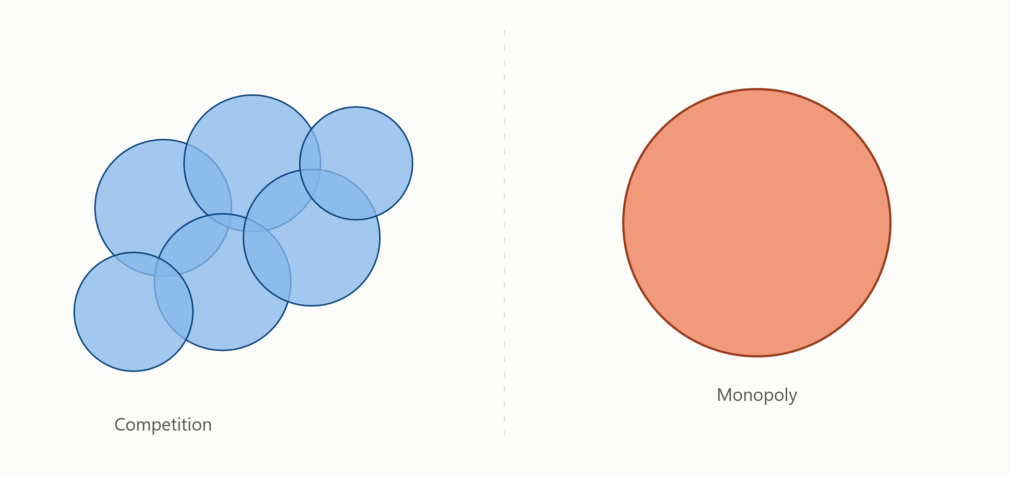
Zero to One One of the book’s most quoted arguments is that competition is not a virtue to celebrate but a destructive force to avoid. In fiercely competitive markets, businesses fight over shrinking margins instead of creating new value. Thiel contrasts this with monopoly-style businesses, which have the breathing room to think long-term, invest in research, treat employees well, and actually improve their product — because they aren’t burning resources just to survive the next quarter.
3. Monopolies Drive Progress, Not Competition
Building on that idea, Thiel makes the case that creative monopolies — companies with no direct substitute, built on genuine innovation — are what push society forward. He’s careful to distinguish this from the illegal, coercive monopolies regulators worry about. A company that makes something so much better than the next-best alternative that customers effectively have only one real choice isn’t cheating the market; it’s the reward for doing something new.
4. Building a Monopoly the Right Way
So how does a startup actually get there? Thiel outlines a repeatable pattern:
- Start small and dominate a niche. Every giant company began by owning a tiny, specific market before expanding.
- Scale deliberately. Move into adjacent markets only once the core is secure.
- Avoid disruption as a strategy. Framing yourself around disrupting an incumbent invites a fight; framing yourself around creating something new avoids one.
- Don’t overstate your market size. Founders who inflate their addressable market to sound impressive usually haven’t actually found a defensible niche.
5. Why “Last Mover” Beats “First Mover”
Being first to market sounds appealing, but Thiel argues that being the last mover — the company that makes the final, defining advance in a market and then enjoys years of monopoly profits — matters far more than being first. First movers often get overtaken by faster followers. What matters is building something durable enough to still be winning a decade later.
6. You Are Not a Lottery Ticket
Thiel pushes back hard on the idea that success is mostly luck. He argues that the most successful founders and companies are the product of definite optimism: a clear plan, executed deliberately, aimed at a specific future — not a series of lucky breaks or indefinite hopes that things will somehow work out. This chapter is as much a philosophy of life as it is startup advice: plan concretely, rather than betting on chance.
7. The Power Law of Venture Capital

For anyone interested in startup investing, this chapter explains why venture returns don’t follow a normal distribution — they follow a power law. A small number of companies in any investment portfolio generate almost all the returns, which means the best investment often outperforms every other investment in the fund combined. The practical implication: investors (and founders choosing which idea to pursue) should only pursue opportunities with truly outsized potential, not diversify into mediocrity. For more on how VCs apply this in practice, see Founders Fund’s investment philosophy — Thiel’s own firm.
(Internal link idea: link this section to your own post on /blog/venture-capital-101 if you have one.)
8. Secrets: What Do You Believe That Others Don’t?
Thiel argues that great companies are built around secrets — important truths that aren’t yet widely known or accepted. He splits secrets into two types: secrets about nature (undiscovered scientific or technical truths) and secrets about people (things about human behavior or markets that others haven’t figured out). Finding a secret and building a company around it is, in Thiel’s framework, the most reliable way to create something genuinely new.
9. Founding Teams and Company Culture
A large section of the book covers the practical mechanics of building an early team — what Thiel calls the company’s “foundation.” Key ideas include:
- Co-founder relationships should be established before the company starts, not figured out on the fly.
- Ownership, control, and cash compensation should be aligned early to avoid future conflict.
- Every early employee should have a clearly defined, non-overlapping role — ambiguity breeds internal politics.
- A strong internal culture (what Thiel calls the company “mafia”) often outlives the company itself, seeding future generations of founders.
10. Sales Is Not Optional
Engineers and technical founders often underestimate distribution, but Thiel is blunt: a superior product does not sell itself. Every business needs a deliberate sales and distribution strategy matched to its price point and customer type, whether that’s high-touch enterprise sales, self-serve online sign-up, or viral growth loops. Ignoring distribution is one of the most common — and most fatal — mistakes technical founders make.
(Internal link idea: connect this paragraph to your own guide on /blog/startup-distribution-strategy if available.)
11. Man, Machine, and the Future of Work
Thiel addresses the fear that automation and AI will simply replace human labor. His view is that the most valuable technologies complement human capability rather than substitute for it outright — computers are extraordinarily good at processing large-scale data, while humans are better at judgment and complex decision-making. The most defensible businesses, in his view, are the ones that combine both.
12. The Founder’s Paradox
In the closing chapters, Thiel explores why unusual, sometimes divisive founders often build the most transformative companies. Strong founders tend to be simultaneously admired and criticized, both indispensable and precarious within the businesses they built. This paradox, he argues, is baked into what it takes to see — and pursue — an idea the rest of the world doesn’t yet believe in.
Key Takeaways

If you only remember five things from Zero to One, make it these:
- Ask the contrarian question. What do you believe that almost nobody else does?
- Avoid competition; aim for monopoly. Build something so different it has no real substitute.
- Start narrow, then scale. Dominate a small market before expanding outward.
- Plan deliberately. Definite optimism beats hoping for lucky breaks.
- Distribution matters as much as the product. A great idea with no sales strategy will lose to a good idea with a great one.
FAQ: Common Questions About Zero to One
Q: What is the main idea of Zero to One?
A: The book argues that true progress comes from creating something new (0 to 1) rather than copying what already exists (1 to n), and that building a monopoly through innovation — not fighting for scraps in a competitive market — is the best path to a durable, valuable company.
Q: Who should read Zero to One?
A: Founders, startup employees, venture investors, product managers, and anyone interested in business strategy or innovation theory will find practical frameworks in the book, even outside the tech industry.
Q: Is Zero to One only relevant to tech startups?
A: While most examples come from Silicon Valley, the underlying principles — differentiation, deliberate planning, and avoiding head-to-head competition — apply to any business trying to build something distinctive.
Q: How long does it take to read Zero to One?
A: The book is roughly 200 pages across 14 chapters plus a preface and conclusion, making it a manageable read in a weekend for most readers.
Q: What’s the difference between Zero to One’s “monopoly” and an illegal monopoly?
A: Thiel distinguishes creative monopolies — companies that win by building something categorically better with no close substitute — from coercive monopolies that block competition through illegal means like collusion or abuse of market power.
Have you read Zero to One? Share which chapter changed the way you think about building a business in the comments below.
Previous Post