




Getting to Yes Negotiation Book: 2026 Ultimate Guide & Review
Getting to Yes : Negotiation Book That’s Somehow Still Right, 40+ Years Later
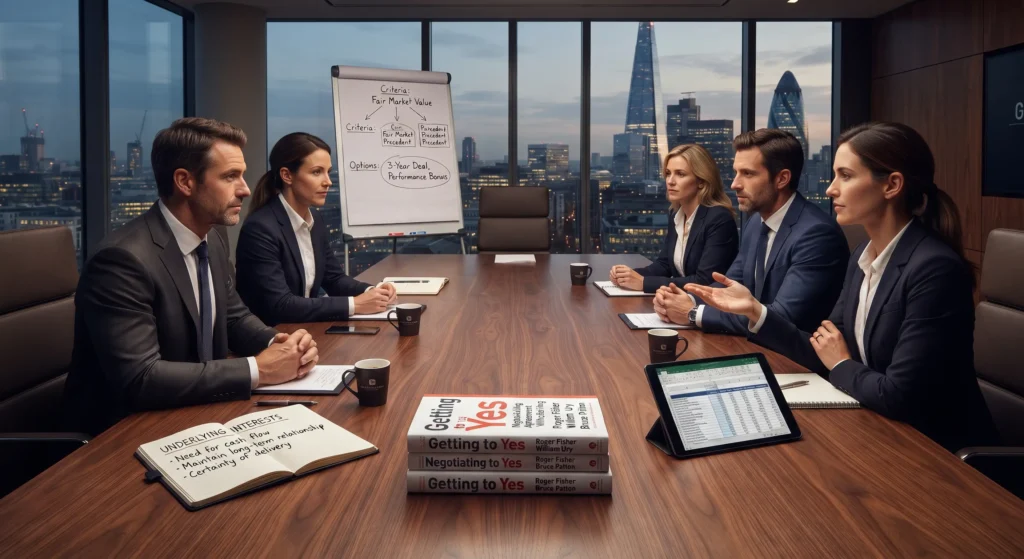
Getting to Yes The Negotiation Book Okay, so if you’ve ever left a negotiation feeling like you either got totally steamrolled or had to be the steamroller to get what you wanted… I’ve got a book for you. It’s called Getting to Yes, written way back in 1981 by Roger Fisher and William Ury, and honestly? It’s still flying off shelves for a reason.
The big idea is refreshingly simple: you don’t have to pick between being a pushover or being a jerk when you’re negotiating. There’s a third option — they call it principled negotiation — where you can go after what you actually want without torching the relationship with the person across the table. Win-win, literally.
And weirdly, this idea has only gotten more relevant. Between remote salary negotiations, international business deals happening over Zoom, and now AI tools jumping in to help mediate things, everyone could use a solid, repeatable way to negotiate that doesn’t make them feel gross afterward.
Table of Contents
The Orange Story (You’ll Never Forget This One)
Getting to Yes: The Negotiation Book kicks off with a story that’s basically negotiation 101, and once you hear it you’ll start seeing it everywhere. Two sisters are fighting over the last orange in the kitchen. Mom, trying to keep the peace, just cuts it in half. Classic “fair” split, right? Except later she finds out one sister just wanted to eat the orange, and the other only needed the peel to bake a cake. If anyone had bothered to ask why each of them wanted it, both could’ve gotten 100% of what they needed instead of everyone settling for half.
That’s basically the whole book in one story. Most of us argue over positions (“I want the orange!”) instead of digging into the underlying interest (“I want to eat it” vs. “I need the peel”). Once you start separating those two things, “win-win” stops being a cheesy phrase people slap on LinkedIn posts and actually becomes a real, useful trick.
- Separate the people from the problem. Go after the issue, not each other.
- Interests over positions. Ask “why,” not just “what.”
- Brainstorm a bunch of options before you lock into one.
- Use objective criteria to settle things, instead of just seeing who blinks first.
The Four Big Ideas Holding This Whole Thing Up
This is the part that basically every business school and law program on the planet teaches, so it’s worth actually understanding.
| Old-School Haggling | Principled Negotiation |
|---|---|
| You’re enemies | You’re teammates solving a puzzle |
| Goal: win | Goal: a smart outcome that actually works |
| Don’t trust them | Trust isn’t even the point |
| Dig in on your position | Dig into interests instead |
| Push harder | Stay reasonable, stay open |
| One answer, take it or leave it | Lots of options on the table |
The four pillars, straight from the source:
BATNA: The One Acronym You Actually Need to Remember
If this book gave the world one gift, it’s this term you’ve probably heard thrown around in a job interview or a Harvard Business Review article: BATNA. Best Alternative To a Negotiated Agreement. Fancy name, simple idea.
Basically, your BATNA is your walk-away power. It answers the question: “if this deal falls apart, what am I actually going to do instead?” And here’s the kicker — knowing that answer (and making it as strong as possible before you even sit down) is way more useful than any tough-guy negotiating tactic. It gives you a real, solid way to judge if the deal on the table is actually good, or if you’re just settling because you’re nervous.
A few other handy concepts that back this up:
- Your reservation price — the worst deal you’d still say yes to, based on your BATNA.
- Objective criteria — pulling in outside stuff like appraisals or industry standards so it’s not just a “my opinion vs. yours” fight.
- The “one text” trick — instead of both sides throwing offers back and forth, a neutral person drafts one proposal and everyone just edits that.
- Brainstorm first, decide later — throw out a ton of ideas before judging any of them, so you don’t kill a good idea too early.
Does It Still Hold Up? Mostly, Yeah
No book from 1981 gets through 40+ years untouched, and this one’s no different.
What’s aged well:
- The whole “don’t let emotions hijack the negotiation” thing was way ahead of its time — this is basically emotional intelligence before that was even a phrase people used.
- BATNA is still the gold standard. Nobody’s topped it.
- Leaning on objective criteria still checks out against what we now know about bias and fairness.
What people push back on:
- Some critics, like negotiation scholar James J. White, point out that not every negotiation is actually win-win — sometimes it really is just a fight over a fixed pie, and playing nice can get you taken advantage of by someone negotiating in bad faith.
- The book doesn’t really deal with what happens when one side has way more power, money, or info than the other.
- It’s also a pretty Western, individualist way of thinking about communication, and doesn’t always translate to cultures where being direct isn’t really the norm.
To be fair to the authors, the 1991 second edition (with a new co-author, Bruce Patton) added a whole chapter on dealing with people who refuse to play nice — basically admitting the original version needed some guardrails.
Okay, But How Do I Actually Use This?
Here’s the fun part — this isn’t just a philosophy, it’s a checklist you can steal for your next salary talk, contract negotiation, or argument with your sibling:
- Figure out your BATNA first. Before you even walk in, write down what you’ll actually do if this falls through. This alone changes your whole energy.
- Ask “why” like three times. When someone states what they want, keep digging until you hit the real reason behind it.
- Sort out what you both actually agree on vs. where you really disagree. There’s usually way more overlap than you’d think.
- Brainstorm without committing. Get at least 3-5 possible solutions out before judging any of them.
- Bring in objective criteria to close any remaining gaps — market data, an outside appraisal, whatever’s fair.
- If things stall, draft one single document and have the other person mark it up instead of trading counteroffers forever.
The trick is discipline — you’re not allowed to just start haggling over numbers until you’ve actually done the work of figuring out what everyone really wants.
The Part Nobody Talks About: Dealing With Difficult People
Most summaries skip this, but it’s honestly one of the most useful parts — what do you do when the other person just isn’t negotiating fairly, or you’re the one with less power?
The authors call one trick “negotiation jujitsu” — instead of fighting back against someone being aggressive, you just… deflect. Ask them questions, invite them to poke holes in your own idea. It sounds counterintuitive but it tends to defuse things way faster than fighting fire with fire.
There’s also “going to the balcony,” which is basically a fancy way of saying: mentally step back from the moment so you can watch the conversation happen instead of getting swept up in it. This idea was such a big deal that Ury wrote an entire follow-up book about it called Getting Past No.
Bottom Line: The Deal Isn’t the Point
If you remember one thing from all this, let it be: the goal was never to “win” — it’s to land on a smart deal without blowing up the relationship. Doesn’t matter if you’re closing a business contract, asking for a raise, or fighting your sibling over an orange — this gives you an actual process to lean on instead of just hoping your charm or stubbornness gets you there.
Try this: before your next big conversation, spend fifteen minutes writing down your BATNA and the real interests at play — yours and theirs. Sounds almost too simple, but it’s usually the difference between settling for a deal and actually feeling good about one.
psychology, and smart decision-making, exploring multiple bestselling titles is the key. At Digital Haven Books, we offer instant digital editions of the world’s most impactful guides. Check out our top recommendations:
- Never Split the Difference by Chris Voss
- The Psychology of Money by Morgan Housel
- The Power of Habit by Charles Duhigg
- Ego Is the Enemy by Ryan Holiday
Visit Digital Haven Books Shop today and download your next favorite e-book instantl

Previous Post
Thinking Fast and Slow Daniel Kahneman:

Next Post